

Double Degrees, Double the Insight: What FLASS's Newest Students Think About AI

Four first-year students admitted to different double-degree programmes share their expectations about the programmes and their views on the role of AI in learning and teaching. From left to right, Li Pui-kwan, Moon Jin Wook, Tam Yik-chung, and Sun Haixin.
As the University prepares for the new 2026/27 academic year, new entrants are busy attending orientation talks and other welcoming events. FLASS FORWARD spoke to four first-year students who attended orientation talks on 12 August, covering various double-degree programmes that combine a Bachelor of Education with a non-education curriculum. Their programmes span business, personal finance, geography, and physical education. They shared the reasons behind their choices, as well as their views on the role of AI in learning and teaching, and how they believe technology and humans should work together in the classroom.
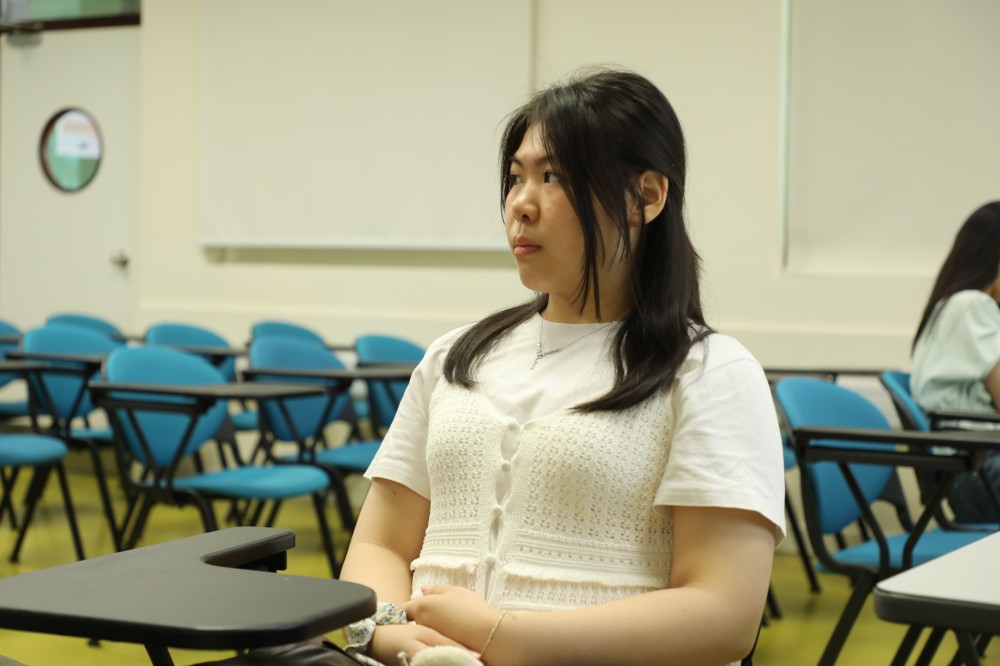
Li Pui-kwan is a first-year student in the Bachelor of Arts (Honours) in Personal Finance and Bachelor of Education (Honours) (Business, Accounting and Financial Studies) (BA(PF)&BEd(BAFS)) double-degree programme hosted by the Department of Social Sciences and Policy Studies (SSPS). During her senior years in secondary school, she chose Business, Accounting and Financial Studies (BAFS) and Economics, which sparked her strong interest in the double-degree programme at EdUHK. “I find the concepts of capital and balance sheets especially interesting. I enjoy working on DSE questions because they require me to integrate all the financial concepts I learn in class. The DSE curriculum also helps me develop a comprehensive understanding of the subject and practical skills for answering questions,” she said.
Looking ahead, Pui-kwan hopes to gain deeper knowledge of BAFS through the BA(PF)&BEd(BAFS) programme while also learning more about personal finance. “I don’t think AI can replace real teachers. Even though it can assist teaching—for example, by generating colourful, eye-catching graphs to help students grasp complicated concepts and by producing lecture summary notes for revision and consolidation—it cannot replace teachers,” she said.
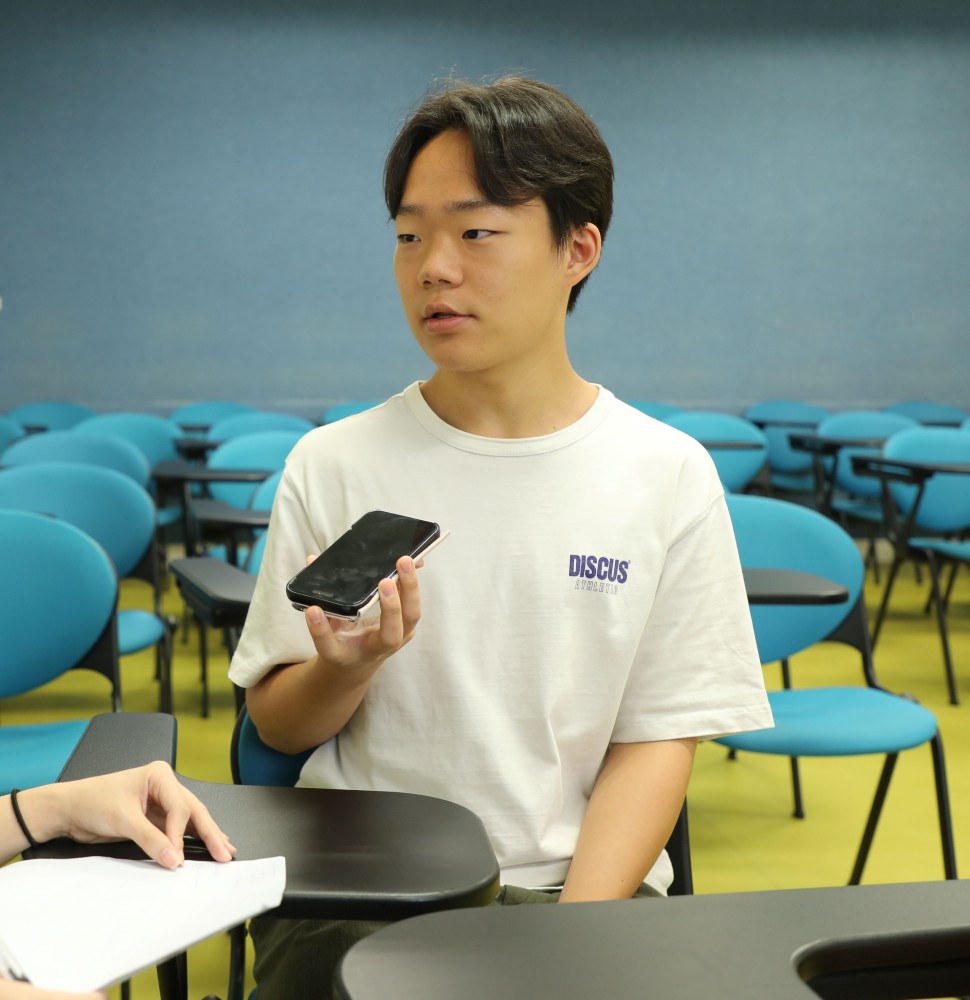
Moon Jin Wook is a Korean student aspiring to become a teacher. When asked why he is interested in the BA(PF) & BEd(BAFS) double-degree programme, he said he developed a growing interest in business and economics during his time at an international school. He is especially curious about how money flows in the market and how businesses make profits. “I hope the double-degree programme will help me learn how to communicate more effectively with clients if I work in the business world, and with students if I become a teacher,” he said.
On the role of AI in education, Jin Wook said he does not use AI in his own learning. However, he believes that as AI becomes smarter, it has strong potential to help students learn more effectively and efficiently. “I am fine with students using AI in their homework, but I disagree with using AI when tackling tests and exams. To reduce the misuse of generative AI, teachers should use more face-to-face assessments and assessments that require students to write answers by hand,” he said. To support academic integrity, he also plans to set clear classroom rules and brief students on academic honesty.
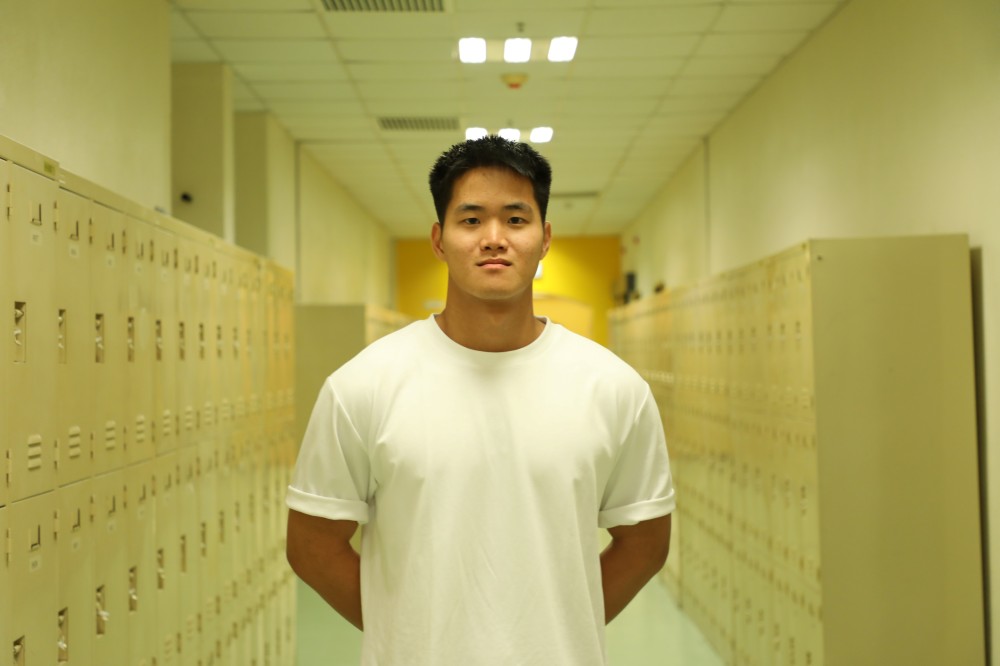
Tam Yik-chung is enrolled in the Bachelor of Science (Honours) in Sports Science and Coaching and Bachelor of Education (Honours) (Physical Education) (BSc(SPSC)&BEd(PE)) double-degree programme, hosted by the Department of Health and Physical Education (HPE). He believes the programme will equip him with the knowledge and skills to become a professional teacher, and will also open up broader pathways for his future in coaching or teaching.
“I expect to learn different pedagogies to meet the diverse needs of students. I also want to learn how to apply technology in sports science and physical education (PE),” he said. The HPE student hopes to shape his future career through internships and believes technology has transformed the way students learn. “For example, iPads are widely used in classes, and VR technology is used in golf training. I hope to use more technology to design engaging learning activities and help students improve their performance,” he said.
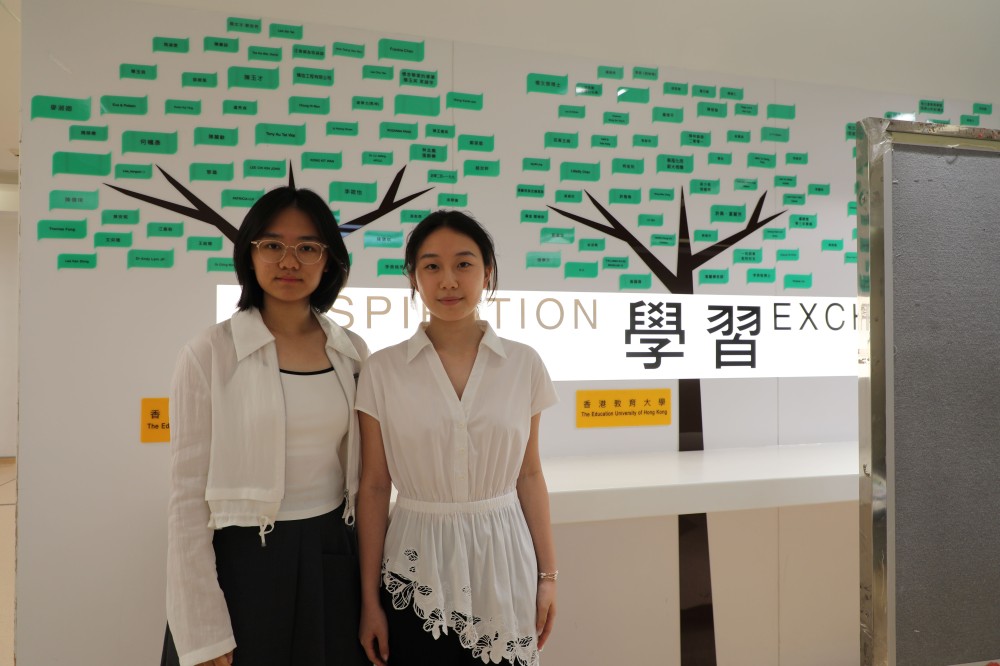
Motivated by a passion for geography, Sun Haixin (pictured, left) enrolled in the Bachelor of Social Sciences (Honours) in Sociology and Community Studies and Bachelor of Education (Honours) (Geography) (BSocSc(SCS)&BEd(GEOG)) double-degree programme. The student, originally from the Chinese Mainland, developed her curiosity in geography from a taster lecture she attended during primary school, and her interest in geography and community studies was further strengthened during secondary school. “I made trips to Inner Mongolia during summer breaks, where I could apply my geographical knowledge. For example, I observed the sun-facing slope—also known as the sunny slope—and the shady slopes of mountains, and how the amount of sunshine affects the vegetation on a hillside,” she said.
Haixin expects the double-degree programme will teach her a systematic approach to studying geography. She is also eager to learn classroom management and communication skills so she can become a professional teacher. “AI can serve as a large knowledge database that helps students quickly extract information, while teachers should focus on nurturing students’ passion through engaging visuals and field trips that allow them to observe real geographical features,” she said in response to the challenges raised by AI.
These first-year students represent the next generation of educators. In their future teaching or coaching work, they will need to combine traditional pedagogies with AI tools. The Faculty wishes them every success in their studies and hopes they will strike a thoughtful balance between drawing on the benefits of AI and preserving the irreplaceable role of teachers.
Click here to learn about FLASS’s various double-degree programmes.
